Can Baby Sign Language Support Speech and Language Development? 5 Common Myths About Signing
Five common myths about baby sign language, plus simple ways to pair gestures with spoken words in everyday routines.
If you have a baby or toddler who is learning to communicate, you may have heard about baby sign language. Signing gives young children a way to communicate before they are able to consistently say words (and it can be especially helpful for children who have a lot to say but don’t yet have the verbal skills to express themselves)!
But baby sign language sometimes gets a bad reputation. Parents may worry that teaching signs will make their child less interested in talking or that their child will rely on signs instead of verbally communicating.
The good news? Using signs and other gestures does not have to compete with spoken language. In fact, using gestures supports early communication and verbal language development.
Let’s look at five common myths about baby sign language.
Myth #1: “If I teach my baby signs, they won’t learn to talk.”
This is probably the biggest concern parents have about baby sign language.
The reality: Using signs does not mean that your child will not learn to talk.
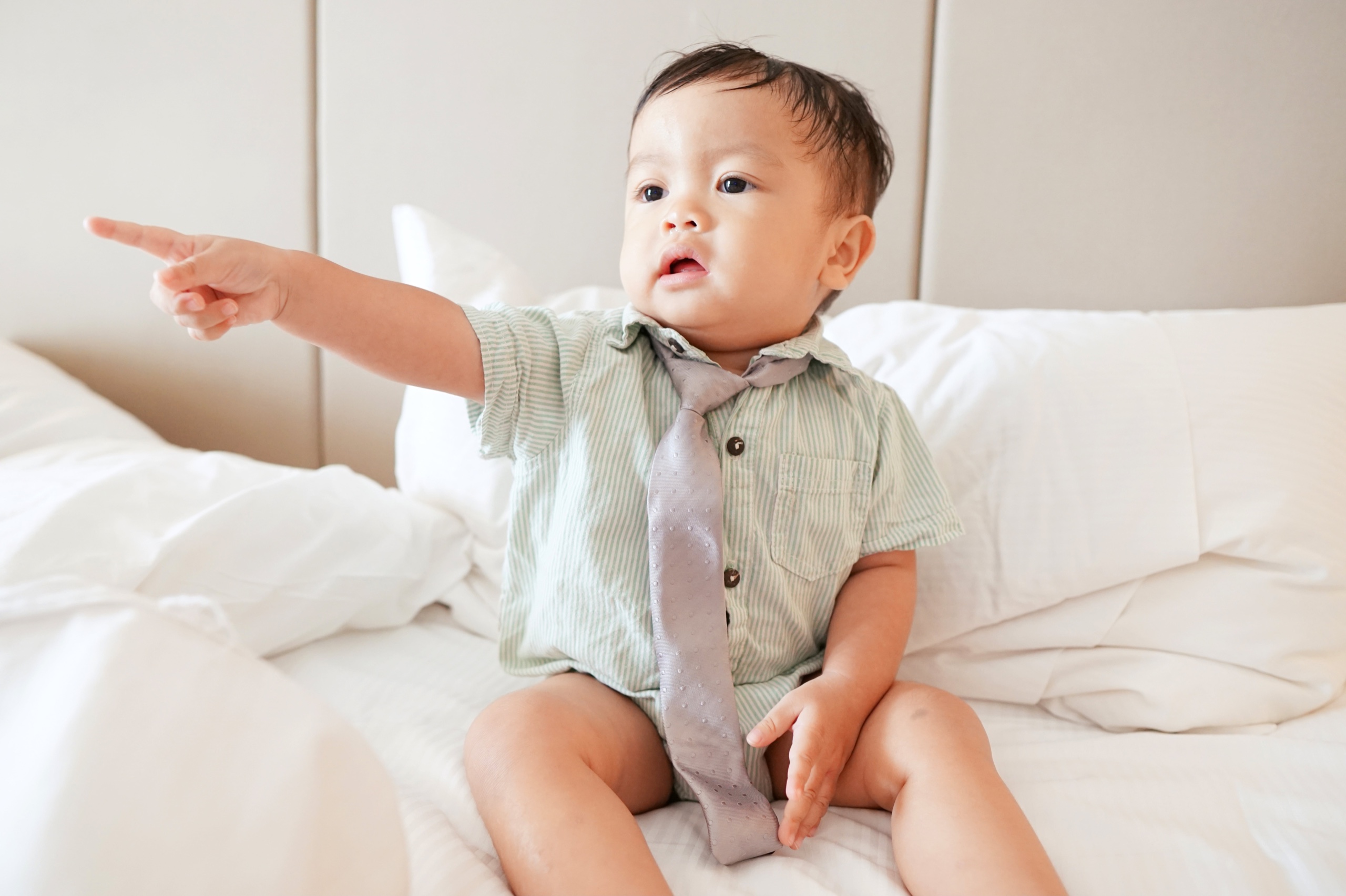
Babies naturally use gestures as part of communication. They point, reach, wave, shake their heads, and hold their arms up to be picked up, all before they have many spoken words.
Gestures give children another way to communicate while their speech and language skills are still developing. When you pair a gesture with a spoken word, you are actually giving your child multiple ways to connect the meaning of a word with the world around them.
For example, when giving your child milk, you might:
Say
"Milk!"
Show
the sign for milk
Give
your child the milk
Over time, your child learns that the spoken word, the sign, and the actual milk are all connected!
The goal isn’t to choose between signing and talking. The goal is to communicate using all the tools available to your child.
Myth #2: “Signing will delay my baby’s speech and language development.”
There is no good reason to avoid gestures because you are worried they will prevent speech from developing.
In fact, gestures are an important part of early communication development. Children often communicate with gestures before they can consistently communicate with spoken words.
Think about pointing. A baby might point toward a dog and look at a parent. The parent responds, “Yes! Dog! Look at the dog!”
That interaction is about much more than pointing. The child is learning that:
- I can communicate with another person.
- My communication gets a response.
- Objects and actions have names.
- Other people can help me understand what words mean.
- I can use communication to share my interests and experiences.
These are important building blocks for language development.
Gestures can give children an early way to participate in conversations while spoken language is still emerging.
Myth #3: “Baby sign language means teaching my child an entire sign language.”
Not necessarily!
When parents hear “baby sign language,” they sometimes picture learning hundreds of signs or becoming fluent in American Sign Language (ASL).
That’s not what most parents mean when they talk about using baby signs.
Families may choose a small number of functional gestures that are meaningful for their child and their daily routines. These might include signs or gestures for:
- More
- All done
- Eat
- Drink
- Help
- Open
- Go
- Up
- Milk
- Mom
- Dad
- Please
- Book
- Play
- Want
You can also encourage natural gestures such as pointing, waving, shaking your head, reaching, blowing kisses, and holding up hands to indicate “up.”
The important part isn’t how many signs your child knows. It’s giving your child opportunities to communicate intentionally.
Myth #4: “My child will only use signs because they’re easier than talking.”
It is understandable to wonder why a child would bother learning to say a word if they can simply sign it.
But communication development isn’t quite that simple.
Children are motivated to communicate in lots of different ways. As their speech and language skills develop, spoken words become an increasingly useful and efficient way for many children to communicate.
Think about a toddler who learns to sign “more.” That sign might help them communicate that they want more crackers.
Eventually, they may begin saying “mo” or “more” while still using the sign. Then they may say “more” without the sign at all.
The gesture can serve as a bridge rather than a barrier.
For some children, a gesture may actually reduce frustration because they have a way to communicate before they can produce the spoken word clearly.
And remember: communication isn’t just about saying words. We want children to learn to initiate, request, comment, protest, respond, share attention, and interact with other people. Gestures can support all of these skills.
Myth #5: “I need to teach my baby specific signs for signing to be helpful.”
Not at all!
One of the most valuable things you can do is simply notice and respond to your child’s gestures and communication attempts.
Notice and respond
- If your baby reaches toward something, you can respond:
- "You want the ball! Ball!"
- If your child points toward a dog:
- "You see the dog! Dog!"
- If your toddler holds out an empty cup:
- "More water? You want more water!"
You can then pair your words with a gesture if you’d like.
This is called modeling. You are showing your child how they can use communication to express themselves.
And don’t worry if your child doesn’t immediately imitate you. They are still learning by watching you.
So, should you teach your baby signs?
For many families, yes! Signs and gestures can be a wonderful addition to early communication.
But you don’t need to turn communication into a lesson. Instead, incorporate gestures naturally into everyday routines:
The combination of spoken words, gestures, facial expressions, eye contact, and shared experiences gives your child so much information about how communication works.
Signs Are Only One Piece of the Communication Puzzle
Baby sign language isn’t a replacement for spoken language. Gestures and spoken language can develop together.
When you use signs and gestures while talking with your baby, you are providing another way for them to participate in interactions, express their wants and needs, and connect words with meaning.
So if your baby reaches for something, points toward a dog, waves “bye-bye,” or learns a sign for “more,” celebrate it!
Those little gestures are communication, and communication is the foundation for language development!